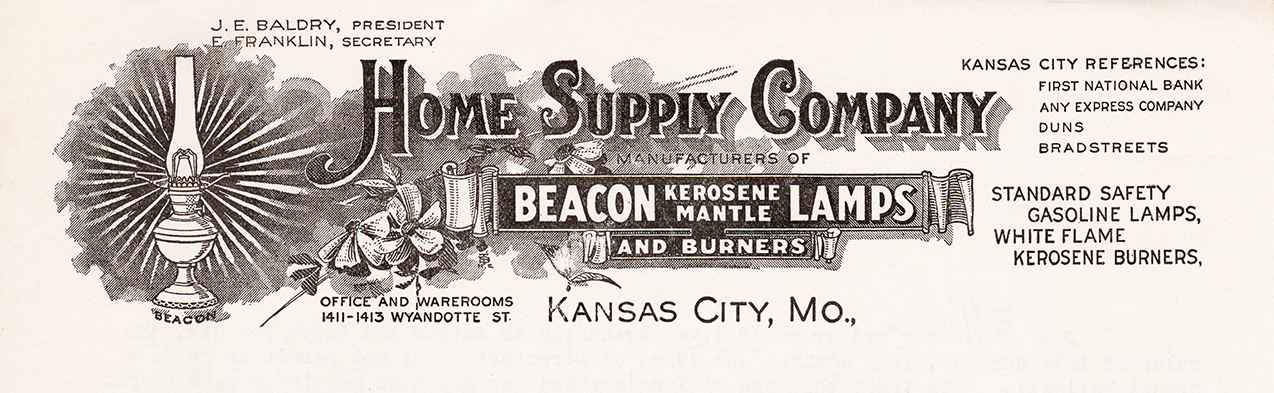
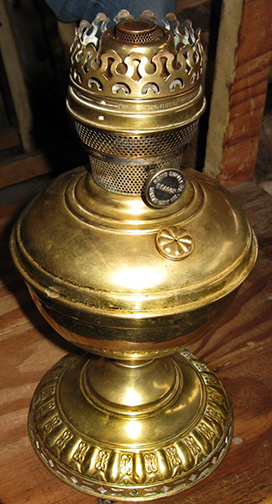
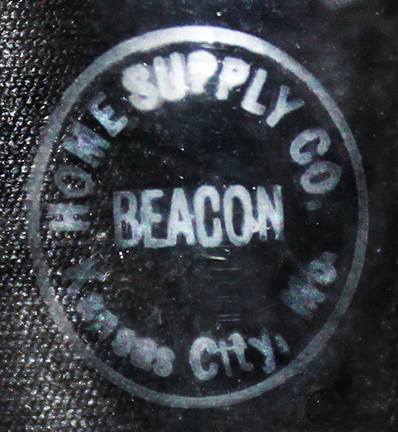
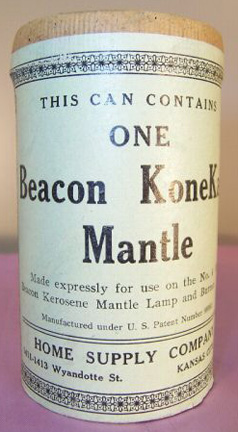
The Home Supply Company of Kansas City, Mo. was formed in 1910 by John E. Baldery. Prior to then Mr. Baldrey had been the Secretary and Treasurer of People's Supply Company for at least a decade earlier. I have found little else beyond that other than he died in 1930. By the beginning of the 1920s sales were in serious decline and in 1924 the Home Supply Company merged with the Solar lamp company, which was also in serious sales decline. By 1926 the company ceased to exist. The Aladdin model 6 was a run away sales success after winning the gold ribbon at the San Francisco World's fair and Aladdin's sales blitz grew their share of the Kerosene lighting market overwhelming most of the existing competition.
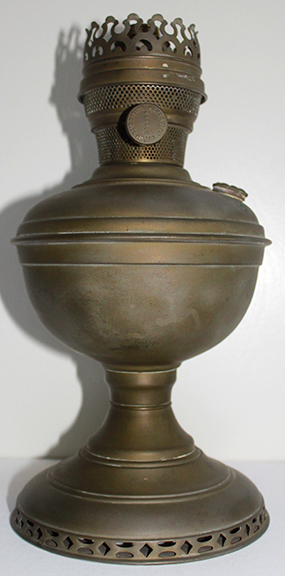
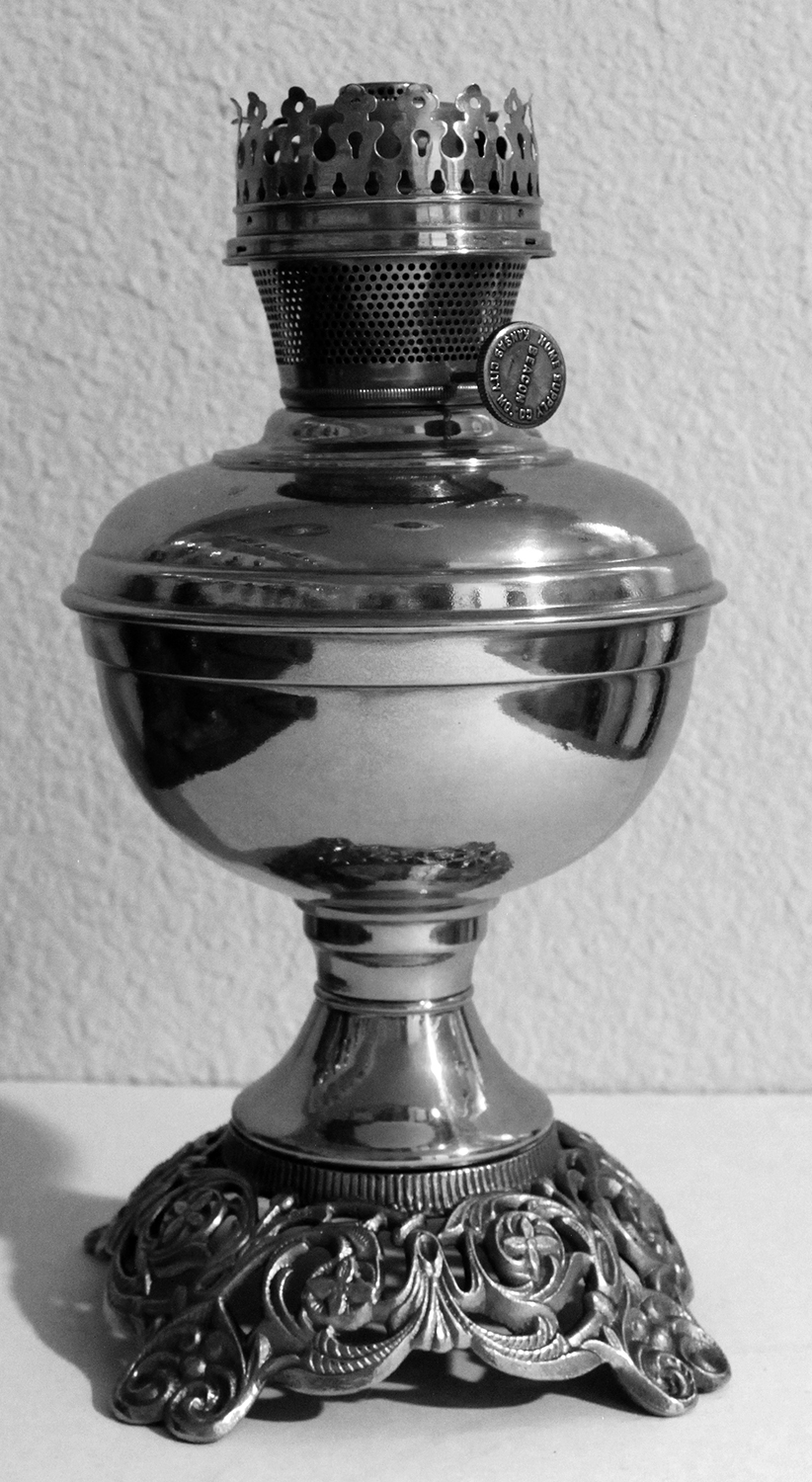
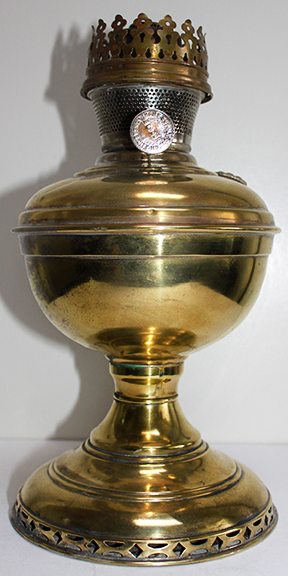
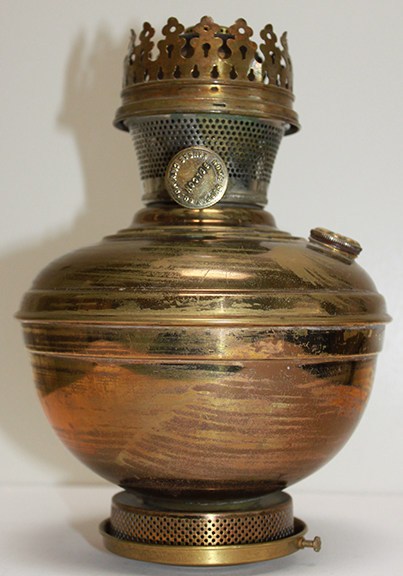
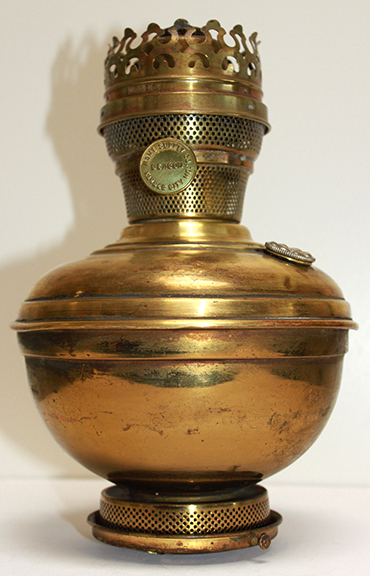
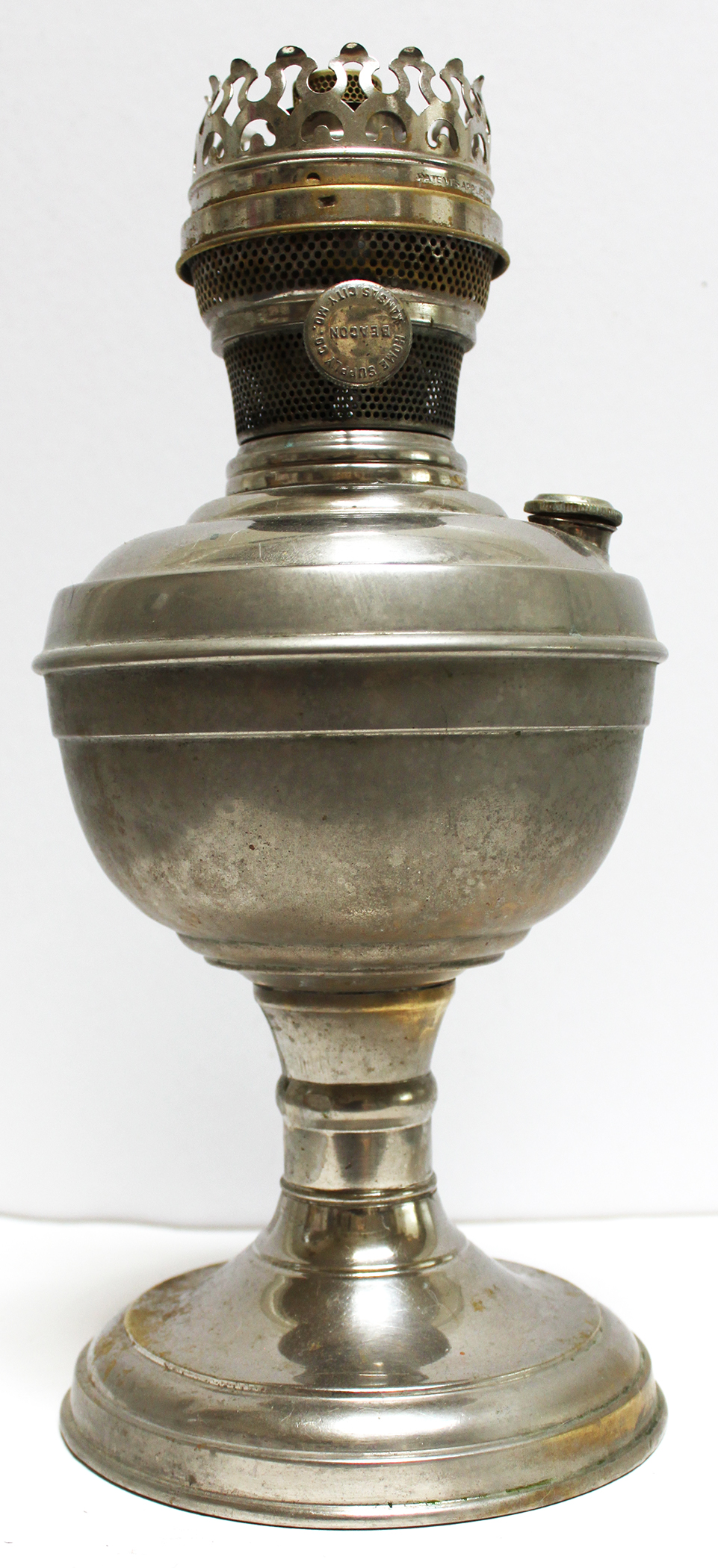
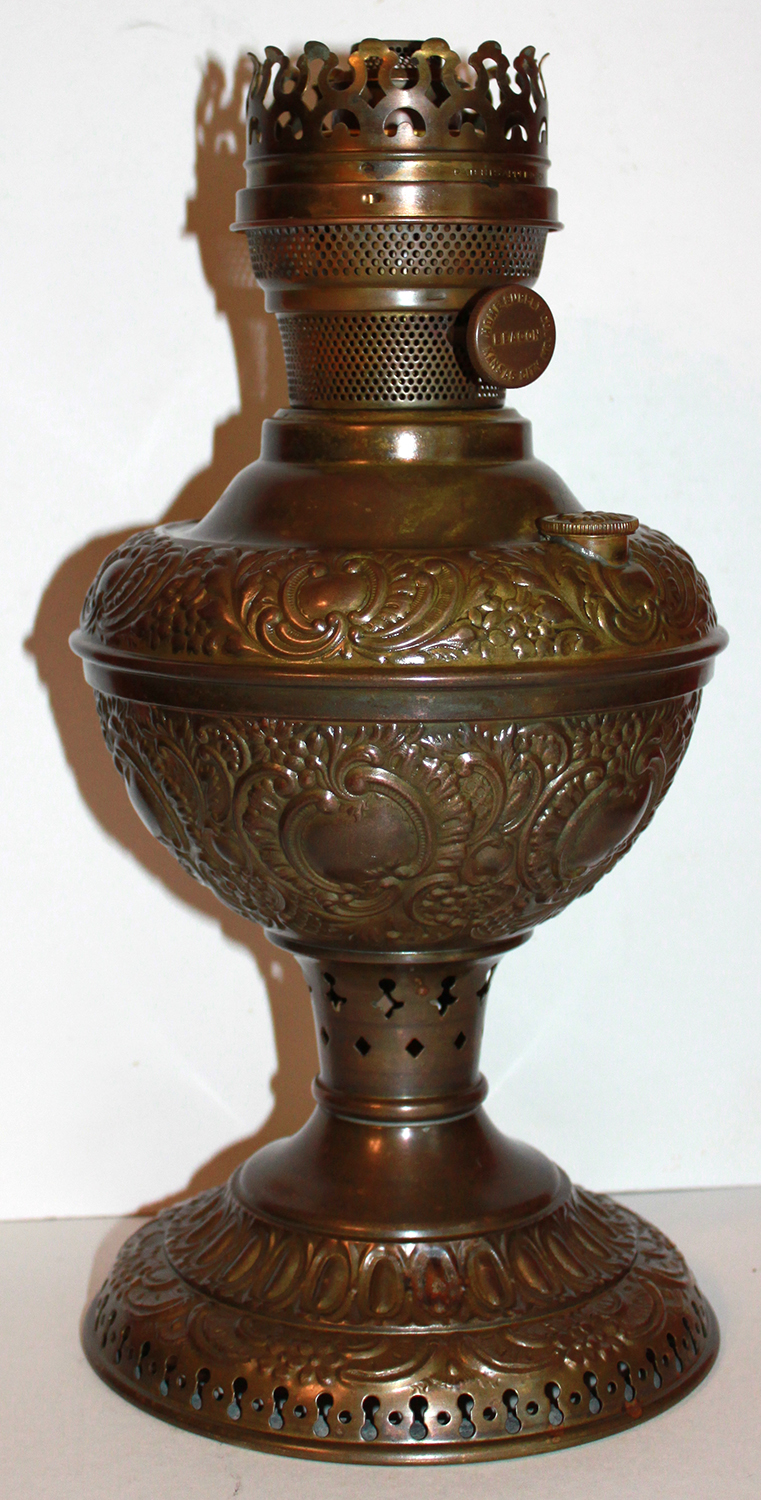
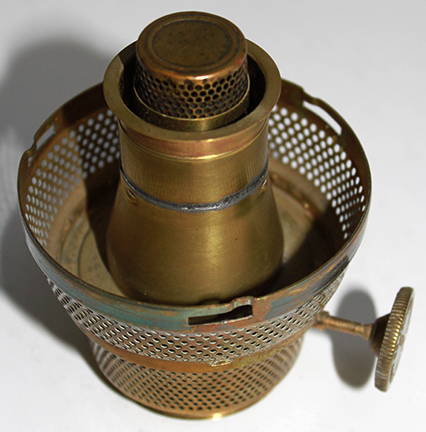
In 1908 Charles E. Wirth who worked for Plume & Atwood designed and patented both a side draft mantle burner and a center draft mantle burner. P&A made minor modifications to a set of tooling for their Royal line of round wick lamps to fit both types of mantle burners. In 1910, the newly formed Home Supply Company started offering side draft lamps based on Mr Worth's side draft burner design on P&A fonts. Small numbers were made using the Royal No2 cast iron foot and stem and the deluxe embossed pattern foot. Like Aladdin they settled on the less expensive plain foot pattern. Most Beacon fonts look like 1-1/2 quart Aladdin lamp fonts without the centre draft tube.
The side draft burners were of offered as upgrades for flat wick lamps. The burners fit standard #3 lamp collars and with an adapter would fit standard #2 lamp collars. Being a side draft burner the Beacon burner would not fit on centre draft lamps.
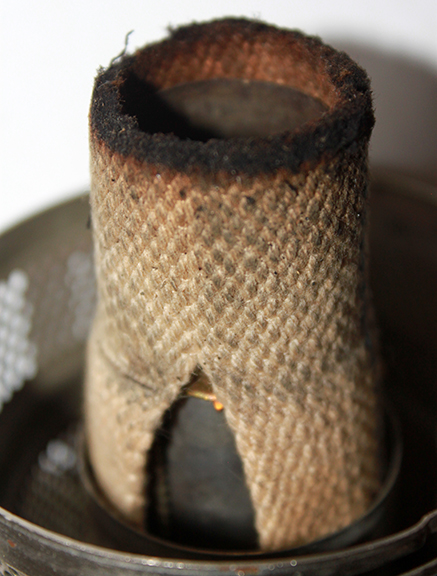
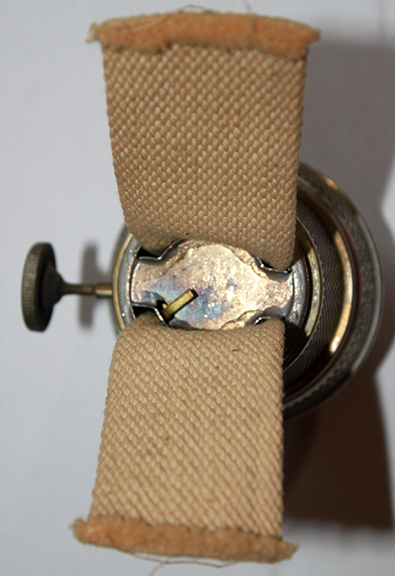
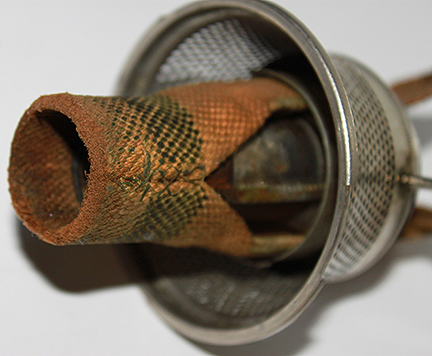
In 1912 Charles Wirth patented an improved version of the side draft burner. The new burner used a tubular wick with two tails and the Cap mantle. The Home Supply Company switched over to the new burner. This was the Beacon model 2. Later Mr Baldery reached an agreement with Aladdin to offer Beacon lamps with Aladdin's patented KoneKap mantles creating model 3 and newer Beacon burners. These burners received a new gallery to fit the KoneKap mantle and a new flame spreader. The new flame spreader looks like an Aladdin model 4 flame spreader without the model number. Instead there was a ring embossed on the top.
The Home Supply Company also purchased a small number of table fonts from Edward Miller & Co that were side draft adaptations of Miller's Juno center draft lamps. There are also a few Beacon lamps using table fonts manufactured by Manhattan Brass.
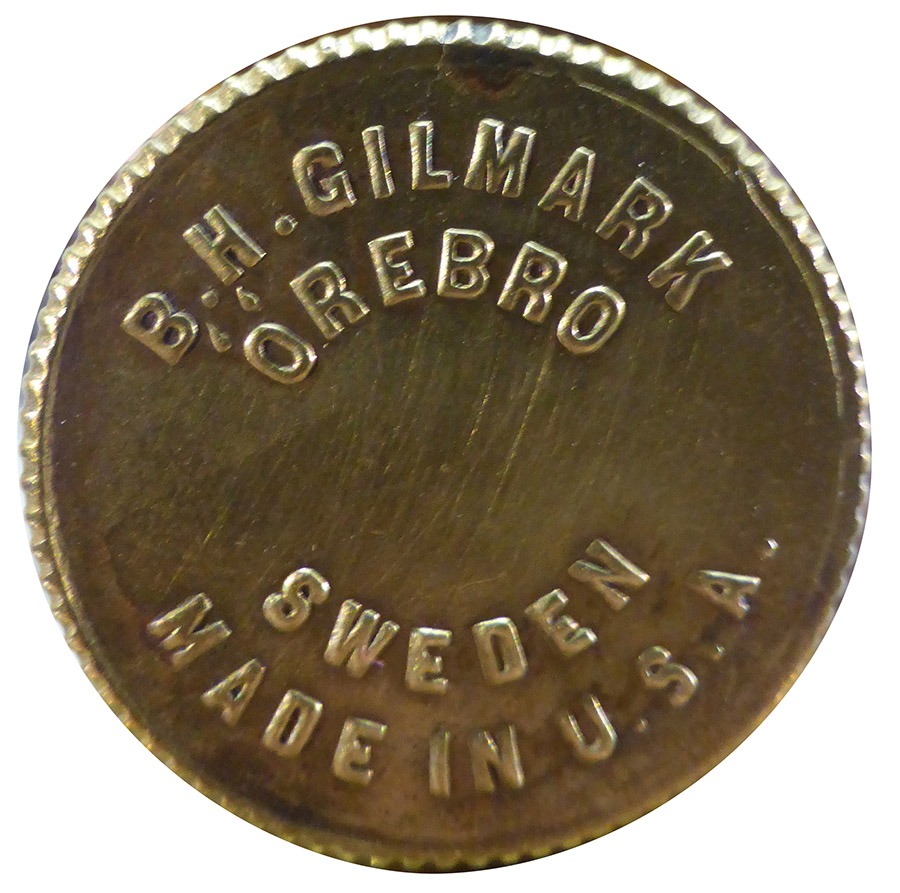
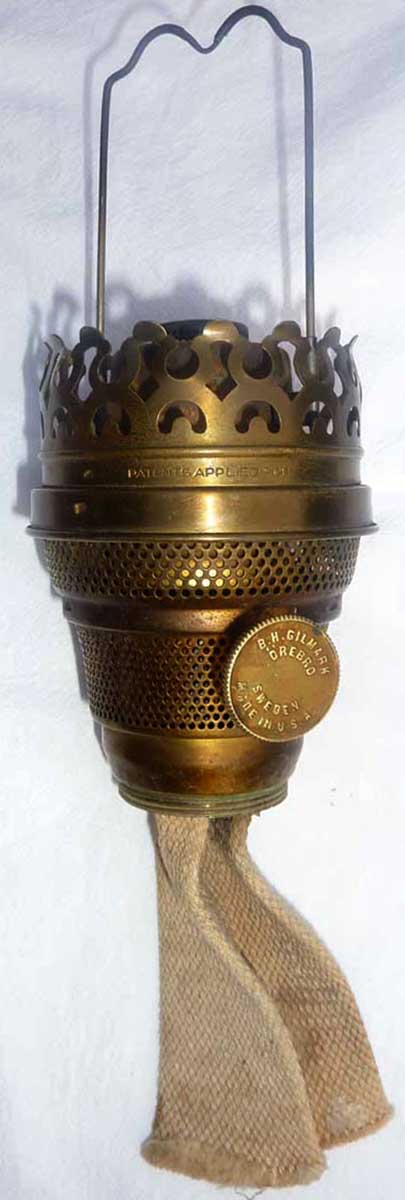
Plume & Atwood sold Beacon style models 3 and 4 burners to B.H Gilmark in Sweden who sold them under their own name on locally sourced fonts. P&A owned the patent so could sell these burners to other companies as well as to The Home Supply Company. These Beacon style burners sold to Sweden came with a US to metric adapter so the burners could be used with lamp bases that had metric threads. I added them to this page because the burners are duplicates to the Beacon burners and could cause confusion.
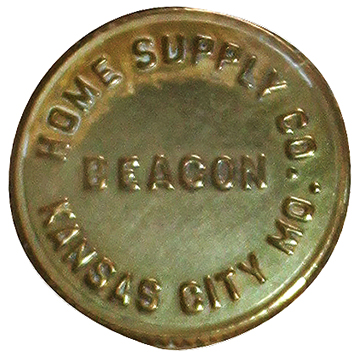
The Home Supply Co. used the same wick adjustment knob for all their models of lamps
Wick adjustment knob on P&A manufactured Beacon types model 3 & 4 burners sold in Sweden.
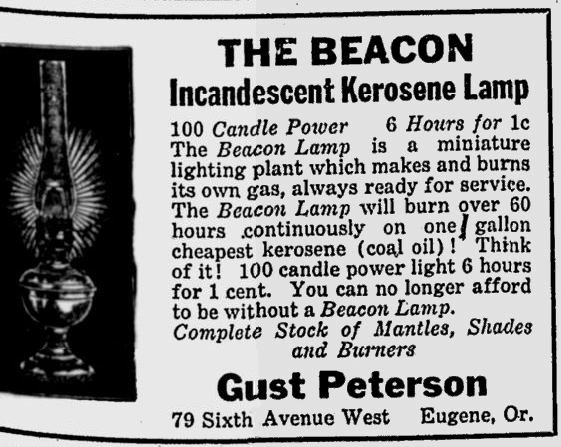
The Home Supply Company used independent sales agents to retail their products. Each sales agent had their own exclusive sales region and were free to place their own ads for Beacon lamps and burners.
The Home Supply Company also produced their own ads for nationwide distribution. Home Supply outsourced their advertising to the Horn-Baker Advertising Co of Kansas City.
Beacon model 1 mantle lamps
(1910 - 1912)
Table lamps used slightly modified existing tooling from P&A's existing
Royal product line to minimize costs. A few Beacon model 1 lamps
were made from the Royal stand lamp No 2 tooling with the cast
iron foot
Beacon always choose to use the 1-1/2 quart bowls.
They eventually standardized on the same foot that Aladdin was
using for their lamps even though the bottom ventilation holes
were not needed. It is assumed that this was the least expensive
option.
Font lamps used the same 1-1/2 quart fonts as Aladdin (minus the draft tube)
using modified P&A Royal brand tooling.
Note: "Center-draft Kerosene Lamps 1884-1940" by J. C. Courter illustrates the Royal line of P&A lamps showing the tooling that was used to stamp both Beacon and Aladdin lamps.
Beacon model 2 table lamp
(1912 - 1913)
Beacon model 2
One thing interesting about this lamp is that it uses the 1-1/2
quart bowl with fancy foot Plume and Atwood table fount.
Normally Beacon table lamps are found with the P&A 1-1/2
quart bowl and plain foot design.
The Beacon model 2 was in production for only a single lamp selling season before it was replaced by a burner that used the new KoneKap mantle in mid 1913.
The Beacon model 2 used an entirely new side draft burner and continued using the Cap mantle. This burner design was patented by Plume & Atwood ( 1044961 ) in 1912 and appeared under multiple brand names including Sunbeam and Lumineer. . This improved model used a tubular wick with two tails. It still used the Cap mantle.
Beacon model 2 wick
This tubular wick was used on newer models
The bottom of the wick riser is bent to limit the travel
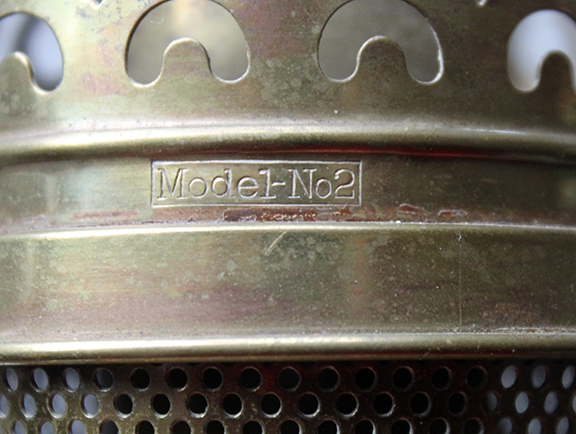
Most beacon burners have no markings stamped in the gallery. Some were stamped with the model number inside a
rectangular box. There are lamps that have a gallery labeled" PAT. APP. FOR" and lamps with the gallery labeled with patent dates.
There seems to be no consistency
Beacon model 4 mantle lamps
Late Beacon oil pot lamp
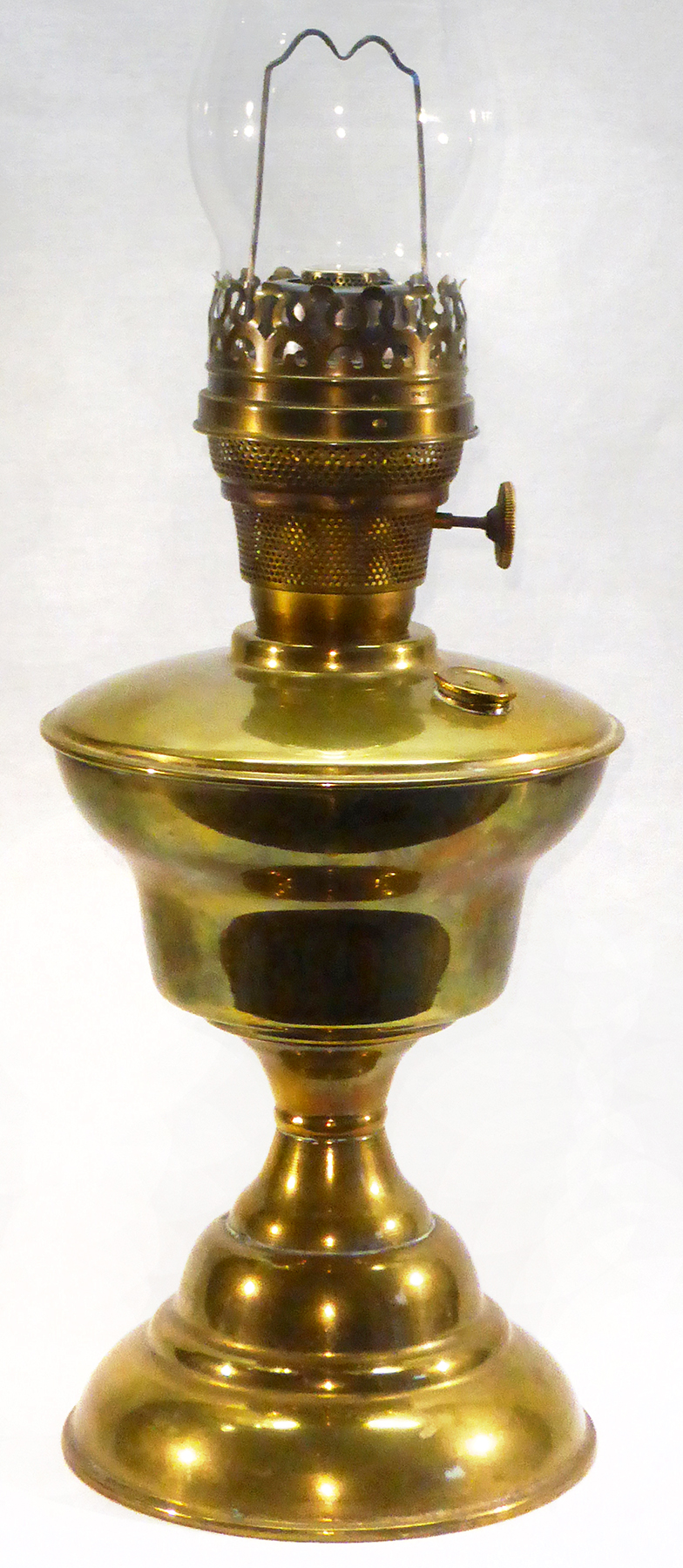
The beacon oil pot lamp is made by Plume and Atwood, the same company that made the Aladdin lamps. The oil pot font used for this lamp is the same as was used for the Aladdin model 1 through model 6 lamps but without the centre draft tube used by the Aladdin lamps.
Oil pot lamps were intended to fit inside a lamp body, such as a vase lamp, gone with the wind style lamp or a hanging lamp body. They made a nice upgrade over round or flat wick oil pots providing a lot more light using less kerosene. This lamp has the Beacon model 4 burner.
A late Beacon burner attached to a fount manufactured by the Manhattan Brass company and sold by a yet unidentified retail or wholesale company
A Manhattan Brass table font with Beacon burner
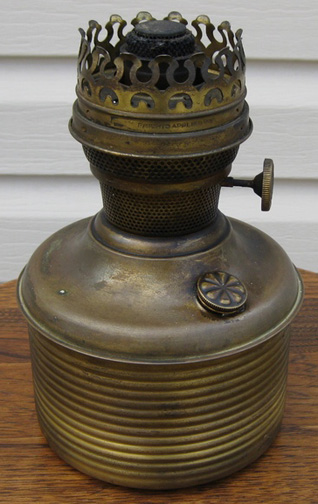
Department store chains prefer to have unique lamps to sell. Montgomery Wards and Sears are good examples, each offering different mantle lamps manufactured by lamp companies for them to offer. Between about 1914 and 1925 or 1926, a yet unidentified retail or wholesale company purchased side draft mantle lamps from the Manhattan brass company to offer to their customers. Manhattan Brass Company (1865-1926)Â is primarily known as a manufacturer of center draft kerosene lamps but also manufactured lamps on custom order for other companies and retail stores*. The Manhattan Brass company manufactured these lamps to order using their Yale No. 2 tooling modified for side draft burners. The Yale No. 2 lamps were center draft table lamps sold directly by Manhattan Brass. Manhattan Brass manufactured the font and purchased side draft burners to place on their fonts. The version with the Beacon model 3 burner (and later, model 4 burner) likely dates from around 1915 through 1925 or1926.
An E. Miller & Co Juno font with a model 3 Beacon burner
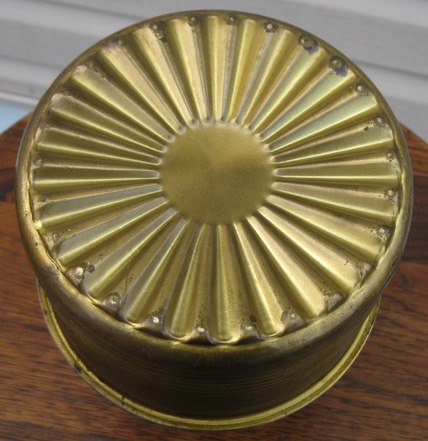
Some late Beacon lamps can be found that use table fonts manufactured by Edward Miller & Co using their Juno center draft tooling modified for aside draft burner. The have been found with both the embossed version and the smooth bowl versions of Juno tooling.
Beacon model 3 burner on a E. Miller & Co. font
Beacon Model 1 burner
"PAT. APP. FOR" is stamped at the base of the burner but a patented search has failed to locate a patent that covers this burner. This burner was manufactured by Plume & Atwood and may be the first side draft burner designed within the United States. Plume & Atwood sold this burner to multiple companies.
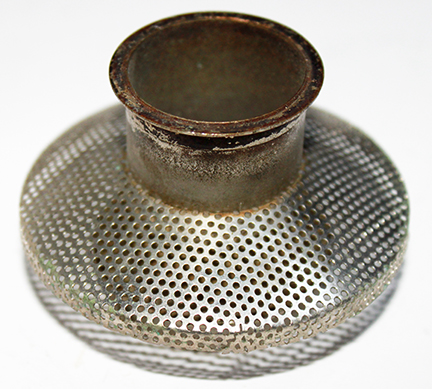
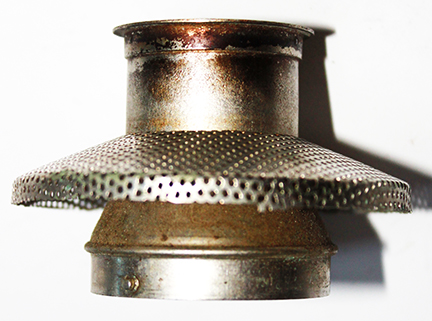
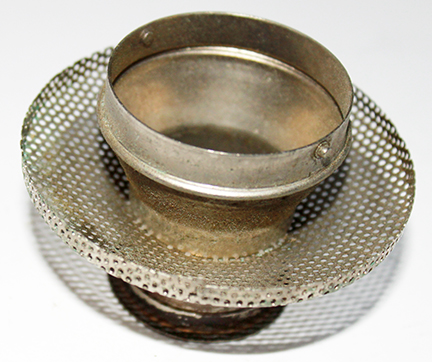
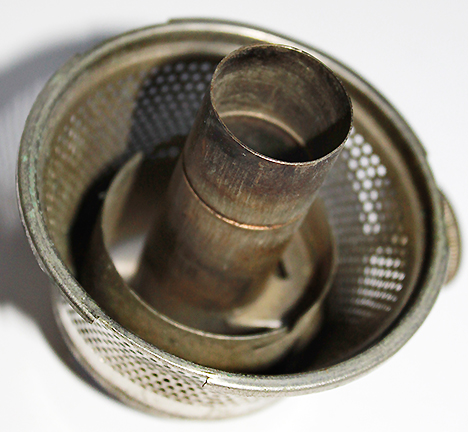
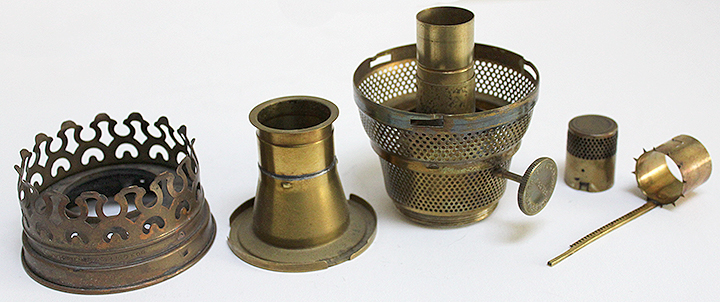
Outer wick tube and air diffuser
The Beacon model 1 air diffuser is one piece and fitted to the outer wick tube before the tube's top flange is assembled onto the tube. Note the 2 pins at the bottom of the outer wick tube. The outer wick tube is attached to the burner base in a bayonet style.
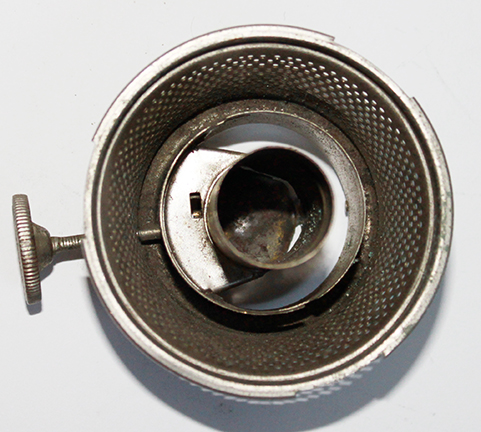
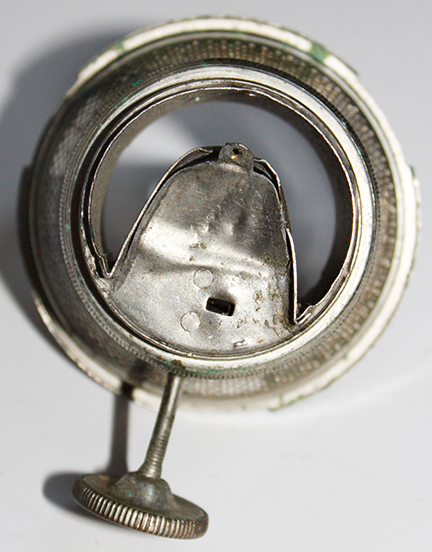
Burner base
The Beacon model 1 burner base is designed to use a flat wick. The rectangular hole on the bottom is for the wick holder which fits from the top.
The early Beacon mantle lamp used a flat wick with the top section sewn together.
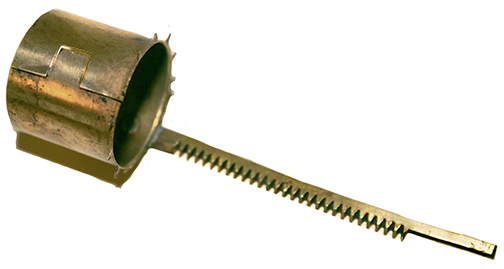
Wick holder for all models of Beacon mantle lamps. The wick holder mounts from the top of the burner with the cylinder at the top. The bottom flange is usually bent over to keep the wick from accidentally being adjusted past the gears.
Model 2 - 4 Beacon mantle lamp burners
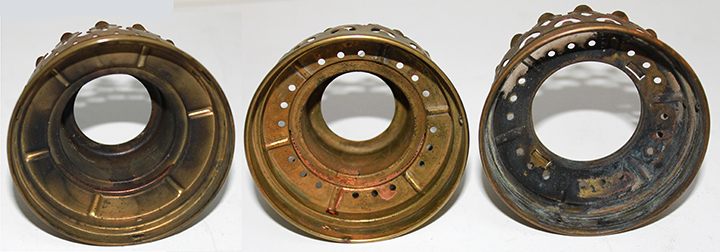
This burner design was patented by Plume & Atwood ( 1044961 ) in 1912. The only difference I could find between the model 2 and model 4 burner is the gallery and flame spreader.
Outer wick tube for the Beacon models 2 - 4 burner
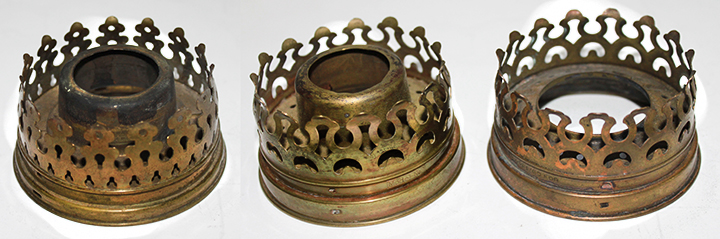
Beacon model 1 gallery
Cap mantle
no markings
Beacon model 2 gallery
Cap mantle
marked "Model - No. 2" inside a box."
Beacon model 3 gallery
KoneKap mantle
marked "PATENTS APPLIED FOR"
Beacon model 4 gallery
KoneKap mantle
Marked "Model 4 PAT. USA, Mar. 14, 11 Apr 4,11 ... Canada Jan 10,11 ... Belgium Sept 1, 10 ... France Oct 28, 10 Other pats. pending"
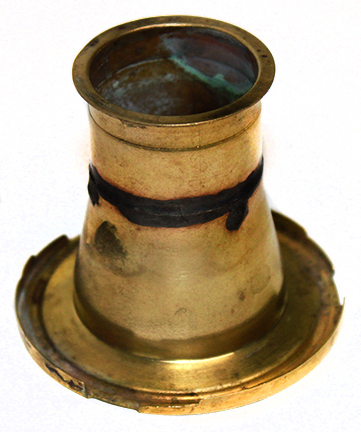
The Beacon model 1 gallery is identical to the Aladdin model 2 gallery except that the locking flanges along the base of the Beacon gallery are much smaller that the locking flanges on the Aladdin Gallery.
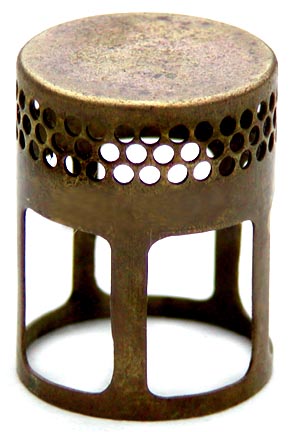
Flame spreader used on the Beacon model 1burner
Flame spreader used on Beacon model 2 and newer burners
Beacon lamp Chimney
The Beacon lamps used the same chimney as the early Aladdin lamps only with the Beacon logo stamped in white ink near the top of the chimney.
Beacon also offered a high altitude chimney that is 16 inches tall. The logo to the left is on a high altitude chimney.
Hangers and brackets
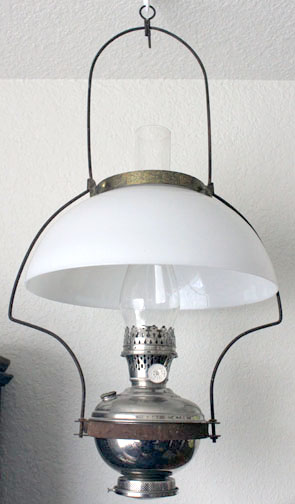
The Beacon lamps used the same ceiling fixtures and shades as the Aladdin model 2 through 4 lamps. They also used the same wall mounting brackets as the Aladdin model 1 through 4 lamps. These items were manufactured by Plume & Atwood
Beacon hanging lamps used the same hanger and shade as this early Aladdin lamp
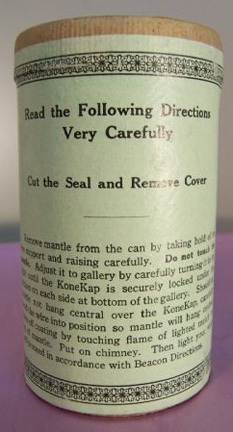
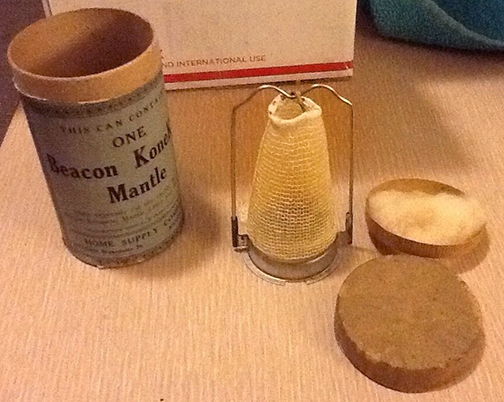
Beacon Mantles
Plume and Atwood manufactured side draft burners for other companies
Plume and Atwood owned the side draft burner patents for the burners purchased by The Home Supply Company (Beacon). P&A was always happy to sell products protected by their own patents to any company who wished to purchase them. One or more companies purchased burners without identifying information on the wick riser knob and at least one company ordered burners with their company information embossed on the knob.
Generic burners
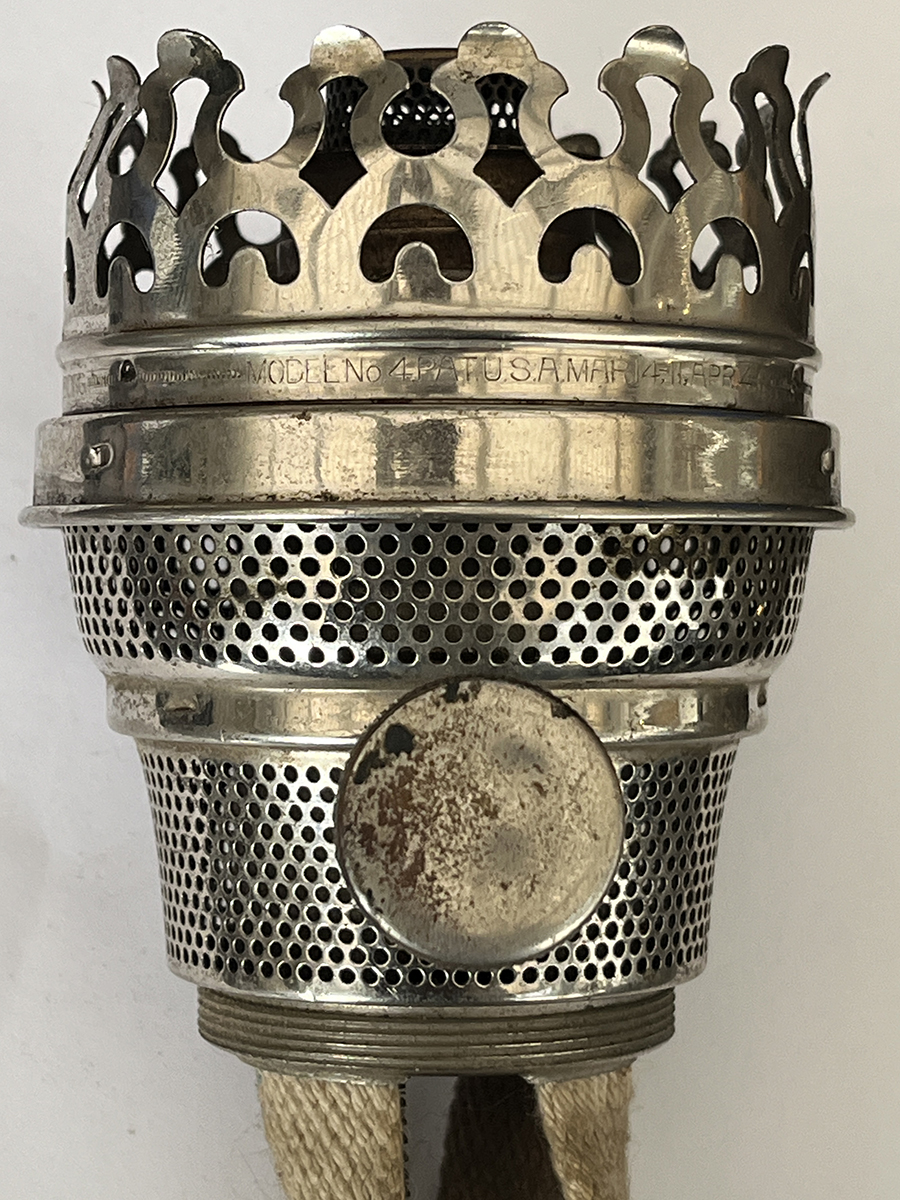
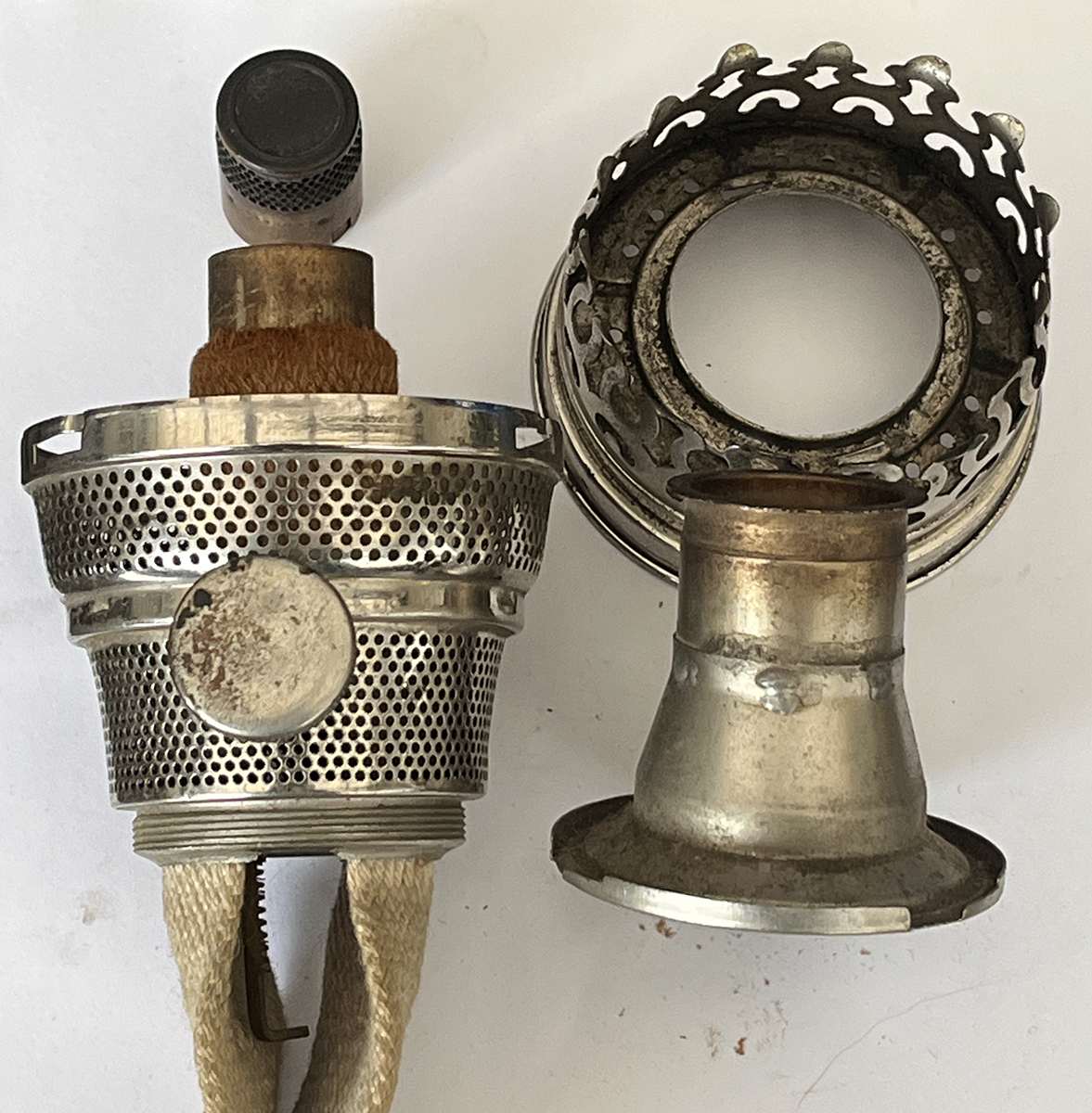
At least one company purchased model 4 burners from Plume & Atwood. It is unknown if they just purchased burners or complete lamps The marking on the side of the gallery reads "Model 4" followed by patent dates.
Plume & Atwood manufactured model 4 side draft burner *
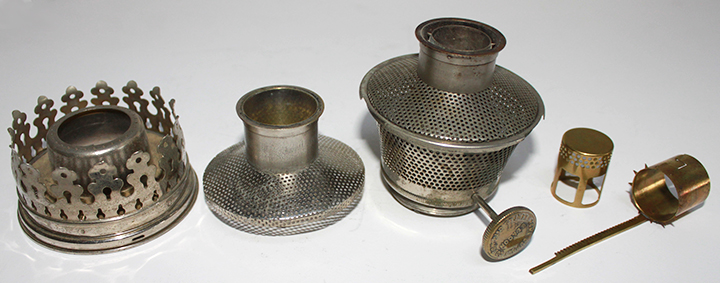
Disassembled model 4 side draft P&A burner *
* Pictures courtesy of A. Truman
Beacon style model 3 and 4 burners were also sold by P&A to The Gilmark company in Sweden
Information and pictures provided by Conny Carlsson
During the 1920s Plume & Atwood sold Model 3 and 4 Beacon style burners to a company in Sweden along with Beacon chimneys, and presumably replacement wicks. KoneKap mantles came from Aladdin. The Gilmark company in the town of
Orebro/Sweden placed these burners on locally manufactured lamp fonts. A US #3 to 14/20 line European 39.5mm thread adapter was used to fit the burner to the lamp font. It is unknown if the adapter was made in the US or Sweden. The winder knob has the Gilmark logo as does the Beacon style chimney. The chimney logo also has the company street address and telephone number.
Lamp with locally produced font
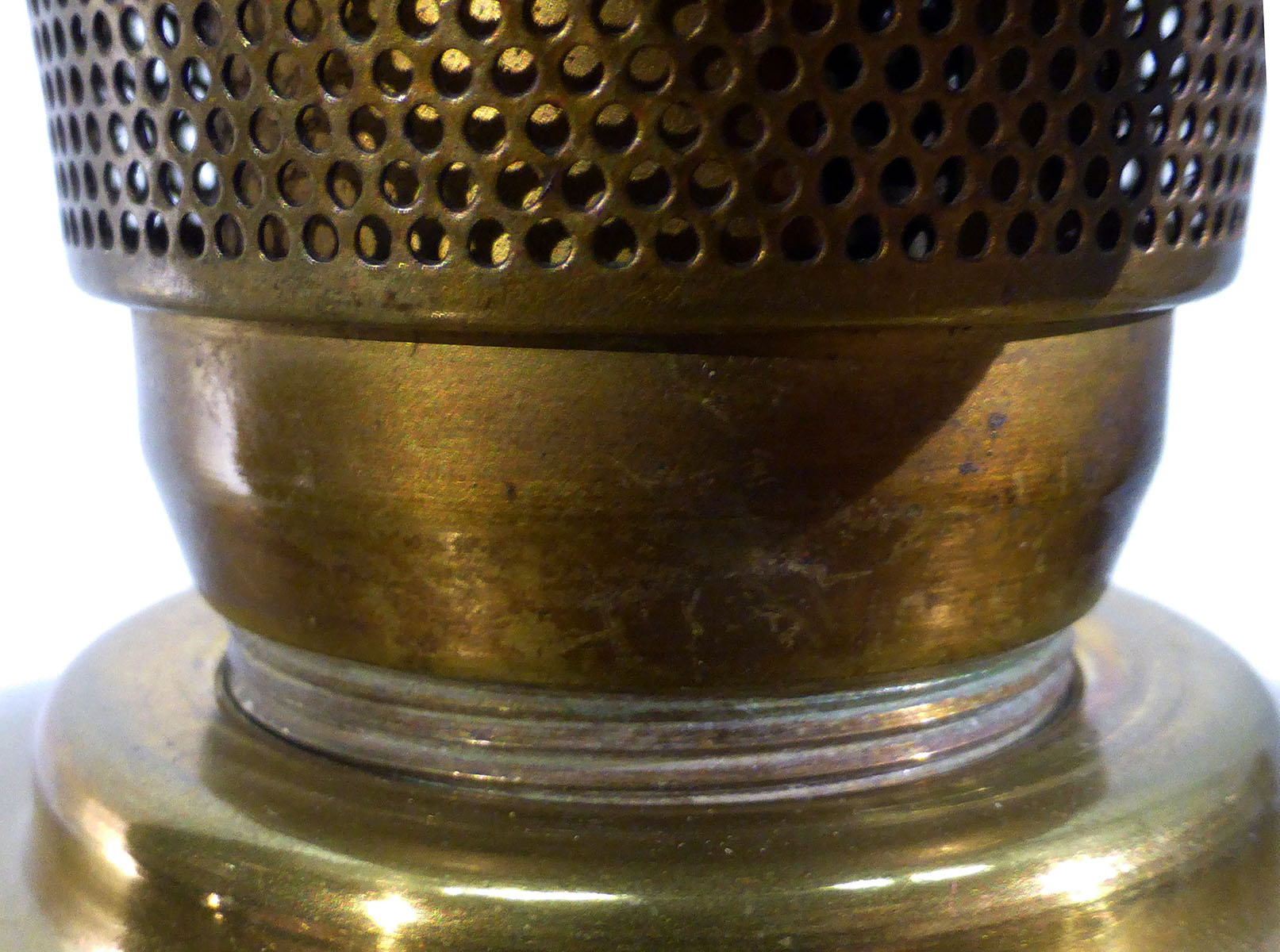
US lamp base #3 to metric
14/20 line European 39.5mm thread adapter
A standard Beacon style chimney was stamped with the Swedish company name, address and phone number.